

Back in 2015, I launched a small CV writing service on the side of my full-time recruitment job.
With no funding, no real business experience and honestly… very little idea what I was doing.
Fast forward 10 years, and that little side project had grown into one of the UK’s most popular CV advice platforms: StandOut CV.
Over the years, the business:
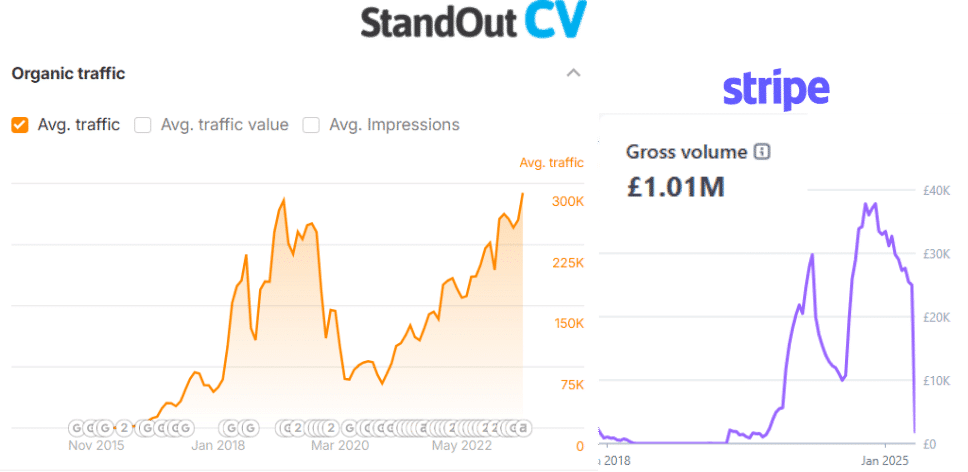
- Generated more than 18 million organic visitors
- Generated more than £1M in subscription revenue
- Generated just under £1M in advertising revenue
- Built a YouTube audience of over 140,000 subscribers
- Grew an email list of more than 100,000 subscribers
- Signed up over 23,000 paying SaaS customers
- Reached over £35K MRR
- Made over £300K profit in its best year
- Was featured in almost every major news publication in the world
- And was eventually acquired in early 2026
The interesting part is that none of this was built with venture capital, huge teams or massive ad budgets.
It was built almost entirely through SEO, content marketing and organic audience building.
Here’s a breakdown of how I did it
Building the audience first
One of the biggest business lessons I learned is that audiences are far more valuable than products.
The business actually went through several different models over the years:
- CV writing service
- Advertising and affiliate revenue
- Digital downloads and templates
- SaaS CV builder subscription product
But throughout all of those changes, one thing stayed consistent:
The audience.
From the beginning, I focused heavily on helping job seekers solve problems:
- How to write a CV
- How to apply for jobs
- How to get your CV in front of decision makers
All of my content was designed to genuinely help people move closer to getting hired.
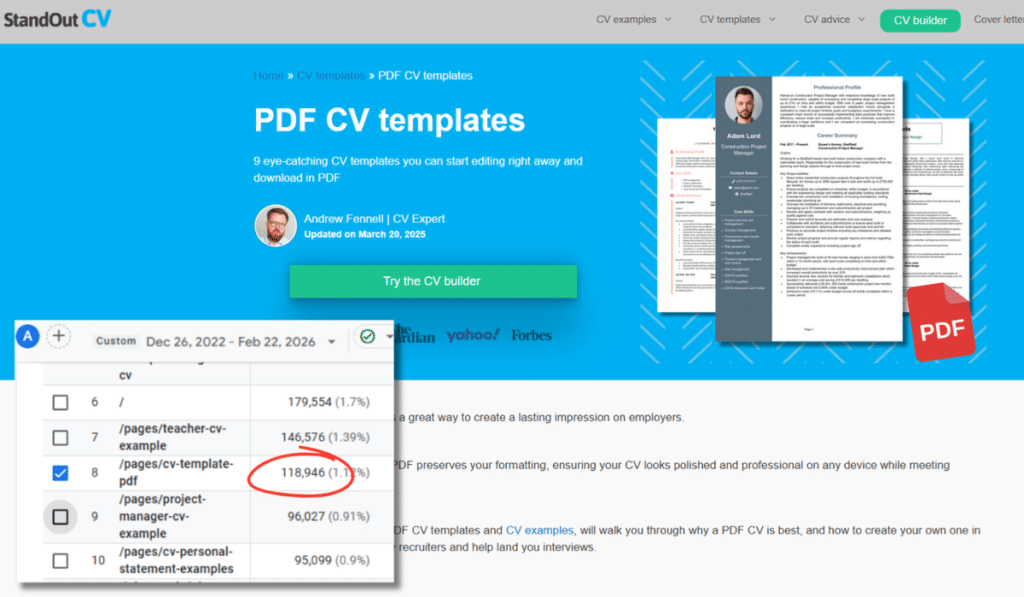
Over time, Google started rewarding that content.
Traffic grew.
The audience grew.
And eventually, monetisation became much easier because we already had attention from the exact people who needed our product.
I think a lot of founders make the mistake of trying to build products first and audiences second.
But in many industries, the audience is the hard part – unless you genuinely have a groundbreaking product like ChatGPT (which most of us don’t!)
Once you own attention and trust within a niche, products can evolve around it.
That’s exactly what happened with StandOut CV.
SEO: The engine behind the growth
SEO was by far the biggest driver of growth throughout the journey.
At its peak, the site was bringing in over 300K visitors every month entirely through organic search.
And despite all the complexity people often attach to SEO, the strategy was actually fairly simple.
It mainly came down to three things:
- Keyword research
- Content creation
- Link building
Keyword research
One thing I realised early was that traffic alone means very little.
You need the right traffic.
So instead of chasing huge vanity keywords, I focused heavily on search intent.
I tried to understand:
- What problems are people trying to solve?
- How close are they to needing a solution?
- What content naturally leads towards our product or services?
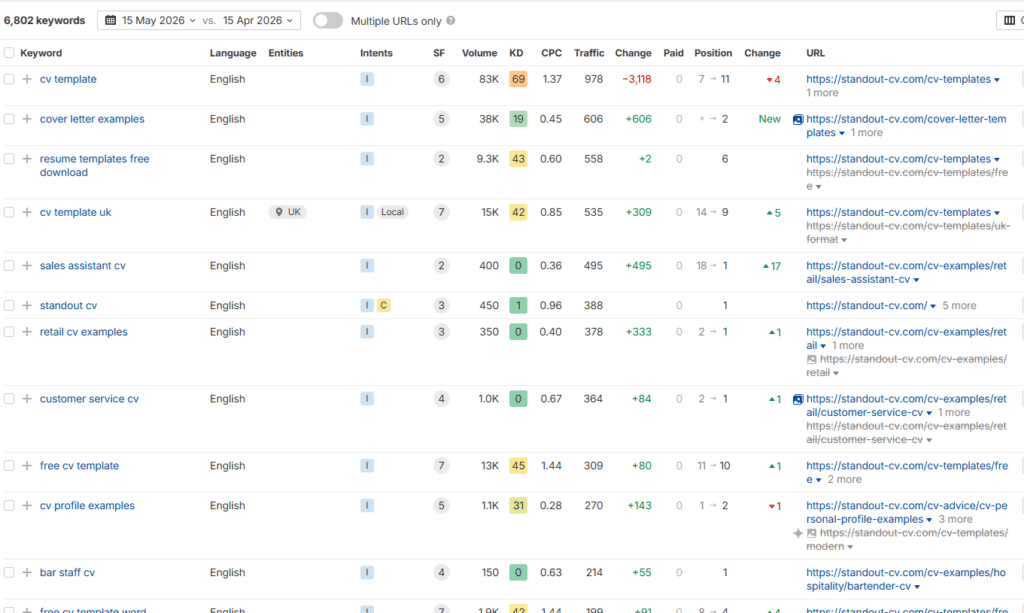
For example, somebody searching:
- “How to write a CV”
- “Best CV template”
- “CV examples for students”
- “How to describe achievements on a CV”
…is often much closer to becoming a customer than somebody casually asking “what is a CV?”
So instead of publishing random blog posts for traffic, we built content around problems that naturally connected to CV products and services
Over time, this created a very predictable flow of visitors and leads.
Content creation
Content was the heart of the business.
And to get your content ranking and converting, it needs to be extremely high quality and helpful.
For years, I published huge volumes of genuinely useful content – writing and formatting all of it myself in the early stages:
- Detailed career advice guides
- CV examples
- Industry-specific templates
- Cover letter examples
- LinkedIn advice
- Salary and career insights
My early attempts were pretty poor, but my content improved as I learnt more about digital marketing and SEO over the years
The site now has hundreds of targeted landing pages serving different professions and career situations.
That breadth became a massive competitive advantage.
Especially because job searching is highly fragmented.
A nurse searches differently to a software engineer.
A graduate searches differently to an executive.
The more specific we became, the better the content performed.
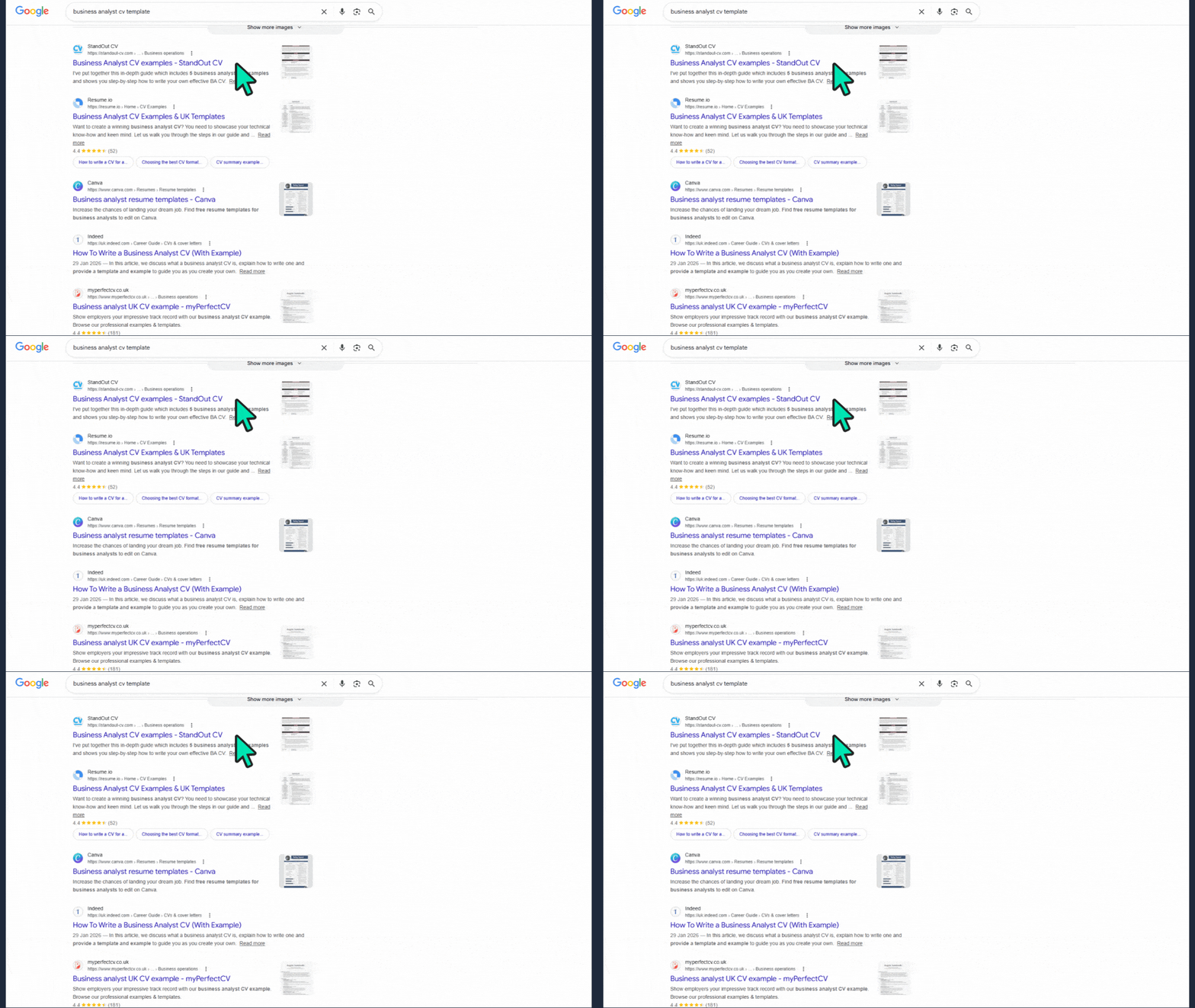
And importantly, we focused heavily on user experience too.
Fast loading pages.
Simple layouts.
Helpful formatting.
Clear calls to action.
Minimal friction.
A lot of SEO success actually comes from making websites genuinely pleasant to use.
As AI writing tools become available in the last few years, we used them to help speed up production, but we never mass-published AI content without.
I believe that human experience and caring about the reader will always be a strong differentiator in marketing.
Link building
Links played a huge role in helping us compete against major brands.
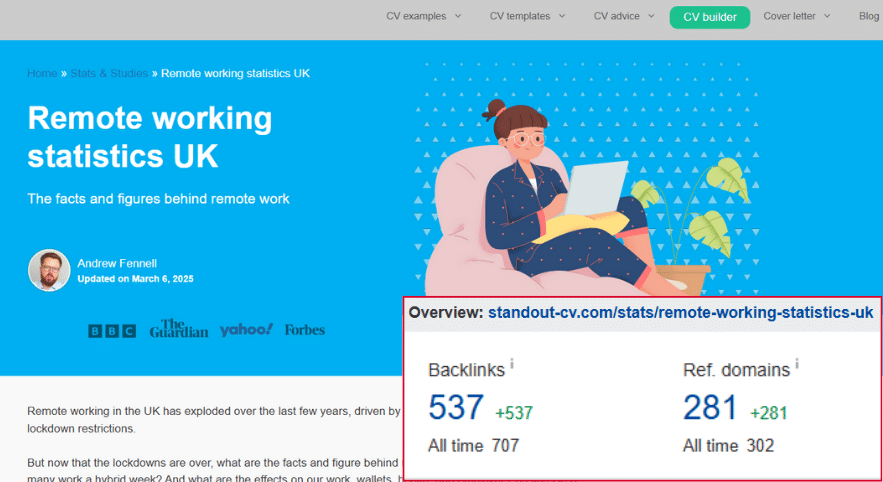
Over the years, we built hundreds of thousands of backlinks and eventually grew the site to a Domain Rating in the mid-70s, which put it amongst a very small percentage of websites globally.
But contrary to what many people think, most of our best links didn’t come from clever “SEO tricks”.
They came from publishing genuinely useful content that people naturally wanted to reference.
We also did proactive outreach, digital PR and guest posting – but the content itself was always the foundation.
One thing I learned is that authority compounds.
Once a site becomes trusted within a niche, growth becomes dramatically easier.
Google starts trusting new pages faster.
Links come more naturally.
Rankings improve quicker.
And before you know it, you have one of the most trusted websites in the space.
Why I diversified into YouTube
One thing that always worried me was relying too heavily on Google.
No matter how good your SEO is, building your entire business on one traffic source is risky.
So I started making YouTube videos for the same audience – job seekers
At first, the videos were terrible.
I was awkward on camera.
Editing took forever.
The channel barely got views.
But over time, things improved.
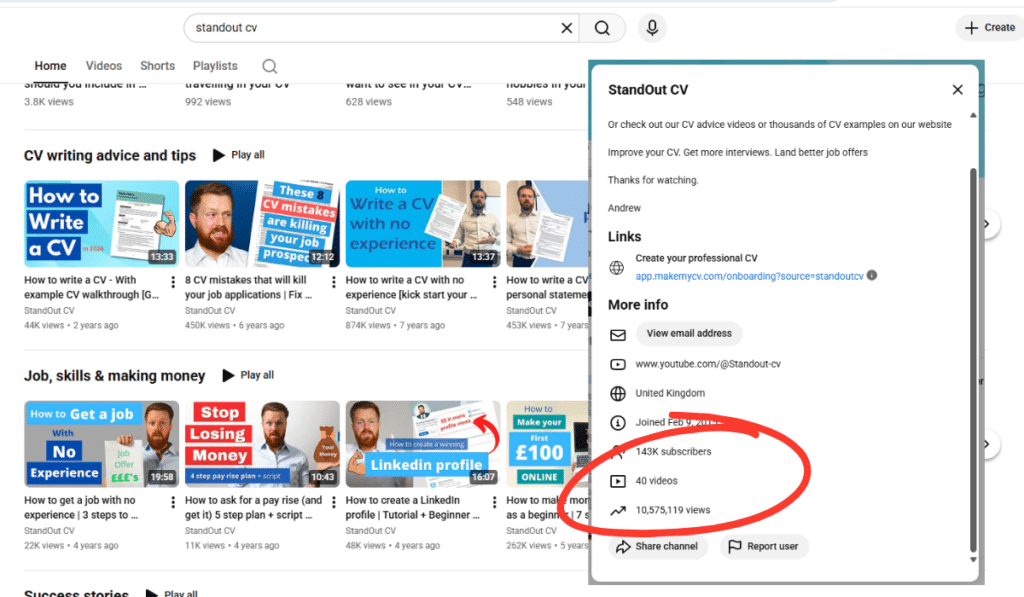
Eventually the channel grew to:
- Over 140,000 subscribers
- More than 10 million views
And interestingly, YouTube did something SEO never fully could.
It built personal connection and trust.
People started recognising me.
They watched multiple videos.
They binge-consumed content.
And when they eventually needed help creating a CV, they already knew and trusted the brand.
That massively improved conversion rates.
The videos also became a huge source of customer insight.
YouTube comments are incredibly valuable.
You quickly learn:
- What people struggle with
- What confuses them
- What language they use
- What objections they have
That feedback loop improved both the content and the product itself.
Building an email list of 100,000+ subscribers
Email marketing became another huge asset for the business.
Every week, we sent helpful career advice content to our audience.
No sales messages – Just collated careers stories from across the internet for that week
Over time, the list grew beyond 100,000 subscribers.
And this became incredibly valuable because unlike search traffic, email audiences are owned assets.
Rankings and traffic can drop overnight when you’re on the wrong side of a big algorithm change – and it happens to even the biggest of brands.
But email gives you direct access to your audience.
It wasn’t a huge direct driver of sales for us, because most people on the list weren’t actively job hunting all the time – but it helped us stay top of mind when they needed a CV quickly.
Building the SaaS product
I eventually shifted the business away from being purely a CV writing service and tuned it into a publishing company that monetised through advertising.
That model worked well for several years, and we eventually secured a flat-fee monthly advertising partnership with the world’s largest CV builder software company.
The revenue was great, but over time the relationship became strained because our content was increasingly competing with (and often outranking) several of their own CV advice websites in Google search.
On a couple of occasions, they pulled out of advertising at the last minute, which effectively left us without revenue for an entire month.
That was a major wake-up call.
I realised the business had become far too dependent on a single advertiser, and despite the strong traffic numbers, it was actually quite fragile without predictable recurring revenue coming directly from customers.
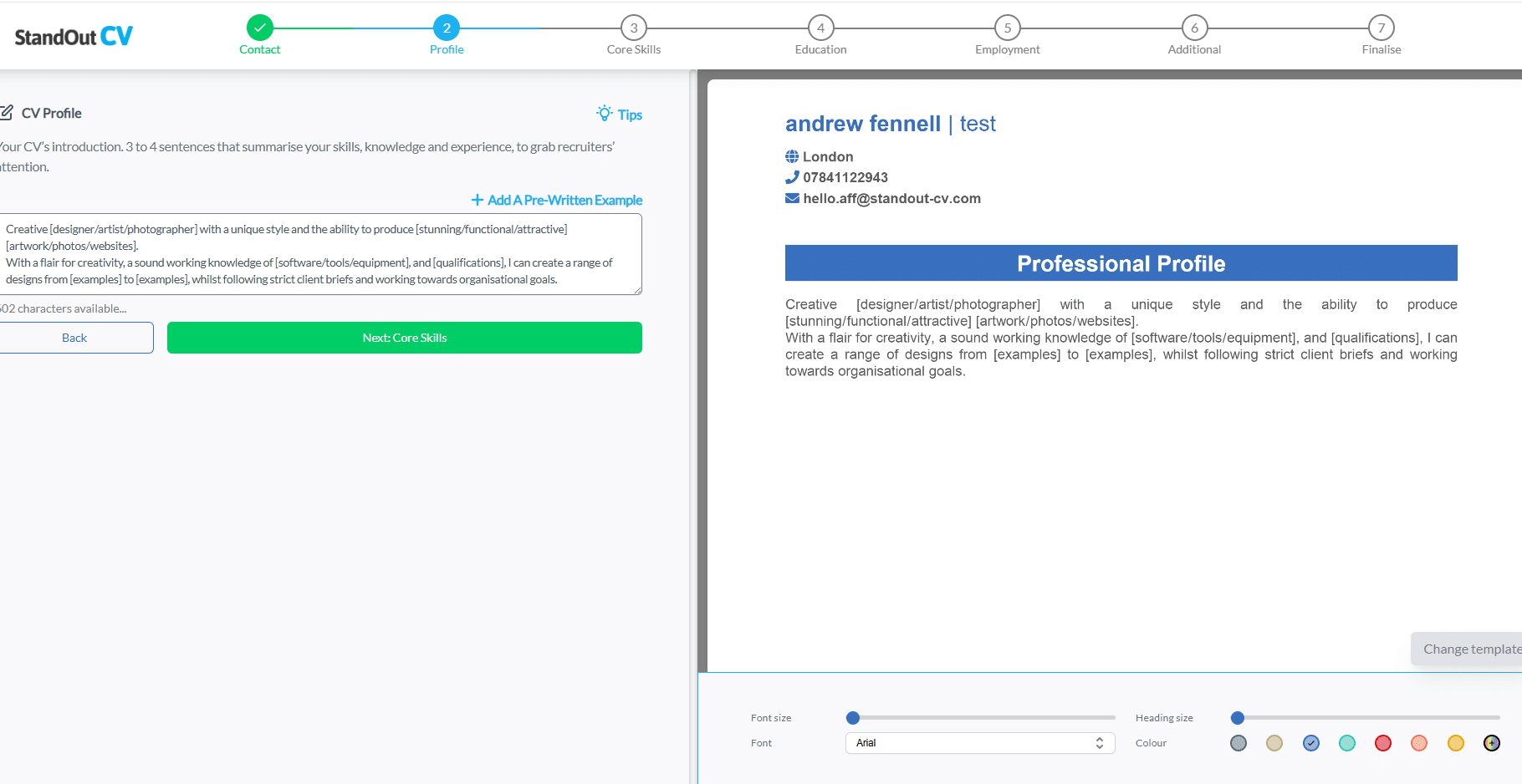
So I decided to build a SaaS CV builder.
This was a huge leap for me at the time.
I had no technical background and couldn’t code.
But I used profits from the content business to fund development.
The initial build
I hired a development agency to build the first version of the platform.
The initial build cost around £30,000.
But realistically, the true cost became far higher once later iterations, redesigns, feature improvements and fixes were included.
And honestly, building software was much harder than I expected.
At the start, I massively underestimated:
- Product design complexity
- User onboarding
- UX decisions
- Support processes
- Retention challenges
- Development management
I effectively became the product manager by default – which was a great challenge, but sometimes difficult to manage alongside what was already a demanding content business.
I handled:
- Product ideas
- UX and design
- User flow decisions
- Feature prioritisation
- Testing
- Feedback analysis
At the same time, we also had to build customer support systems and operational processes around the product.
The SaaS side of the business became a completely different challenge compared to content publishing.
Pulling the product and rebuilding it
One of the hardest decisions was temporarily pulling the original product because the early results simply weren’t good enough first time round.
At the time this felt like a massive failure because I had already invested heavily into the platform – in money, time and effort.
But in hindsight, rebuilding was one of the best decisions we made.
We spent time speaking to customers in detail.
We analysed behaviour inside the product.
And I brought in a product consultant who had recently left a competing platform.
That process completely changed how we thought about the user journey.
Instead of throwing users into one giant intimidating CV editor, we broke the process into smaller guided stages.
The product became far more manageable psychologically.
That one UX shift had a huge impact on completion rates and conversions.
It was a big lesson in how small friction points can massively affect SaaS performance.
Growing the SaaS business
Once the rebuilt product gained traction, growth accelerated significantly.
The content engine fed users into the product every single day.
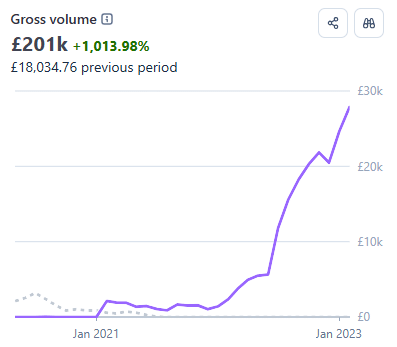
And because customer acquisition costs were so low through organic traffic, the economics became incredibly attractive.
At its peak, the business reached:
- Over £35K monthly recurring revenue
- More than 23,000 paying customers
- Over £1M cumulative SaaS revenue
And the best part was how lean the business remained.
The entire operation ran with:
- Just one staff member
- Two specialist agencies
- A handful of freelancers
That’s something I still find fascinating about content-led SaaS businesses.
With the right acquisition engine, relatively small teams can build very profitable companies.
In our best year, the business generated over £300K profit.
On top of this, it wasn’t a nightmare to run like a lot of lucrative businesses – because I wasn’t working with clients or having to personally deliver services.
So I could still have a flexible schedule, avoid working weekends (mostly) and go on holidays with the family.
The exit
For years, I had occasional conversations with competitors and companies within the CV space about acquisitions or partnerships.
But nothing serious ever materialised.
Then something unexpected happened.
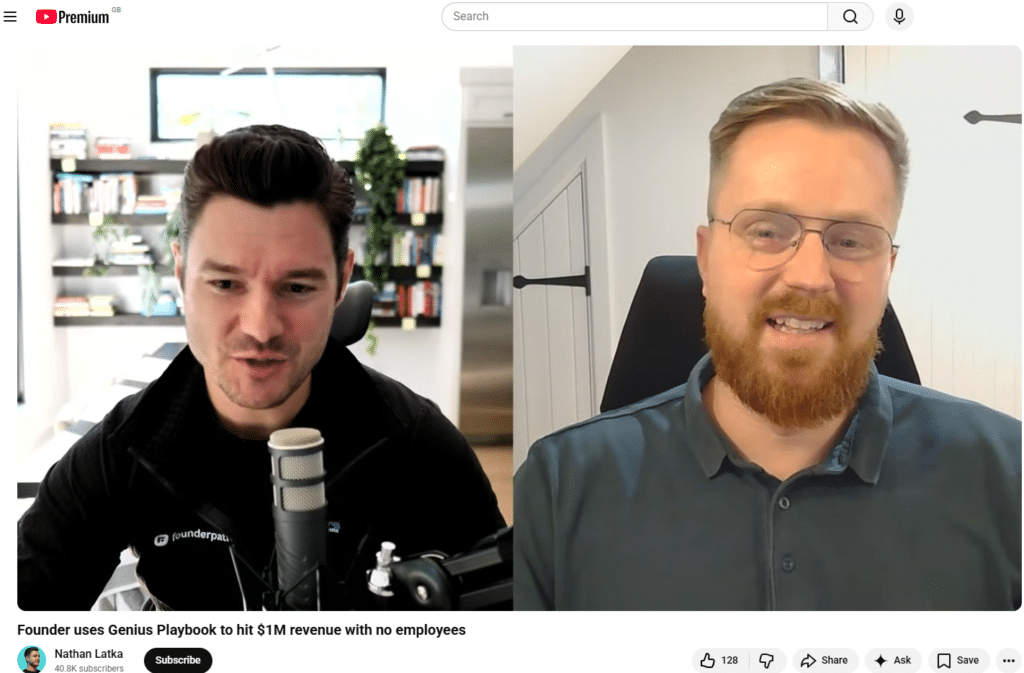
I appeared on a SaaS podcast talking about the journey of growing the business.
The episode wasn’t even intended to attract buyers.
It was mainly to share lessons and promote my next venture.
But shortly afterwards, an investor got in touch.
And after a quick chat and sharing of our Stripe numbers, they moved quickly.
They already understood the value of organic traffic and audience ownership.
And after discussions and due diligence, we agreed on a six-figure acquisition.
What really stood out to me during the sale process was this:
Buyers cared far more about the traffic engine and customer acquisition system than flashy product features.
The predictability of the organic growth was incredibly valuable.
And ultimately, that’s what made the business so attractive to the investor.
Key lessons from the journey
Audience is everything
Products can change.
Platforms evolve.
But trust and attention are incredibly valuable assets.
Build the audience first whenever possible
Organic content marketing compounds
SEO and content marketing can feel painfully slow at first.
But once momentum builds, the compounding effect becomes extraordinary.
One article can generate customers for years.
One video can keep attracting leads indefinitely.
That leverage is incredibly powerful.
User experience matters massively
Good marketing brings users in.
Good user experience keeps them.
Tiny friction points can destroy conversions.
Obsessing over usability (on the website and in the app) made a huge difference to our growth.
Listen to customers constantly
Some of our biggest improvements came directly from customer feedback.
The rebuild of the product happened because we listened properly.
Customers will often tell you exactly what’s wrong if you pay attention.
Play the long game
Almost none of this happened quickly.
The business took years to compound.
There were long periods where growth felt painfully slow – especially in years 1 to 2.
But consistency over a long enough timeframe becomes a huge competitive advantage because most people quit too early.
What’s next?
The world of SEO and content marketing is changing rapidly.
Google is evolving.
AI search is changing discovery behaviour.
And brands can no longer rely purely on ranking blog posts in Google.
Today, businesses need to show up everywhere their customers search:
- YouTube
- ChatGPT
- AI search tools
- Social platforms
- Communities
- Email inboxes
That’s exactly why I launched LinkQuest.
I’m now helping SaaS founders and marketers build modern organic growth systems that generate visibility, trust and revenue across multiple channels – not just traditional search engines.
Because ultimately, the core lesson from my journey remains the same:
The businesses that consistently help people, build trust and play the long game are the ones that usually win.